
Resurface or rebuild? Planning a commercial lot project without closing your doors
For a business owner, the pavement question is really two questions. What has to be done to the lot, and what happens to customers, tenants and deliveries while it is done? This guide covers both for Louisville and Elizabethtown properties.
Our American Paving division also published a version of this topic: Mill-and-overlay vs. full replacement, and how long a commercial lot takes.
Two ways to renew a lot
Resurfacing, often called mill and overlay, removes the top layer of worn asphalt and puts a new layer in its place. Rebuilding removes the asphalt and usually the stone base under it, then puts everything back in layers. Resurfacing renews the surface. Rebuilding renews the structure.
How to tell which one your lot needs
Stand in the lot after a rain and walk it slowly.
- Firm surface with ruts, wear and scattered patches: resurfacing is a real option.
- Pavement that moves, rocks or feels soft underfoot: the base is suspect, and a rebuild is more likely.
- Wide areas of connected cracking: this usually means the base has given way.
- Water that sits for hours: grade and drains need work, and a thin new layer will not cure that.
A contractor should explain the choice based on how your pavement is failing. If two proposals call for different methods, ask each one why.
What a resurfacing job involves
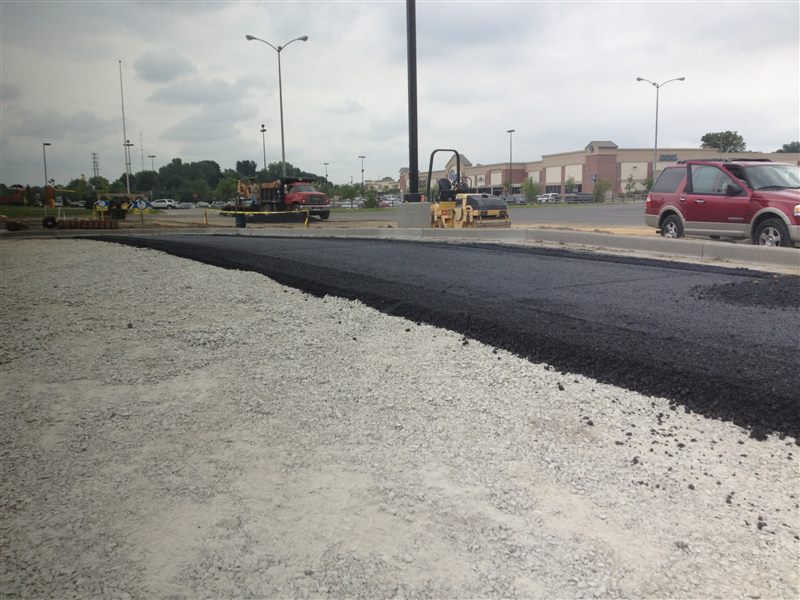
Crews grind off a set depth of old asphalt, repair any spots that failed all the way down, apply a tack coat, then place and roll new hot mix. Striping goes on once the surface can take paint. The sequence is simple, so the job tends to be short.
What a rebuild adds
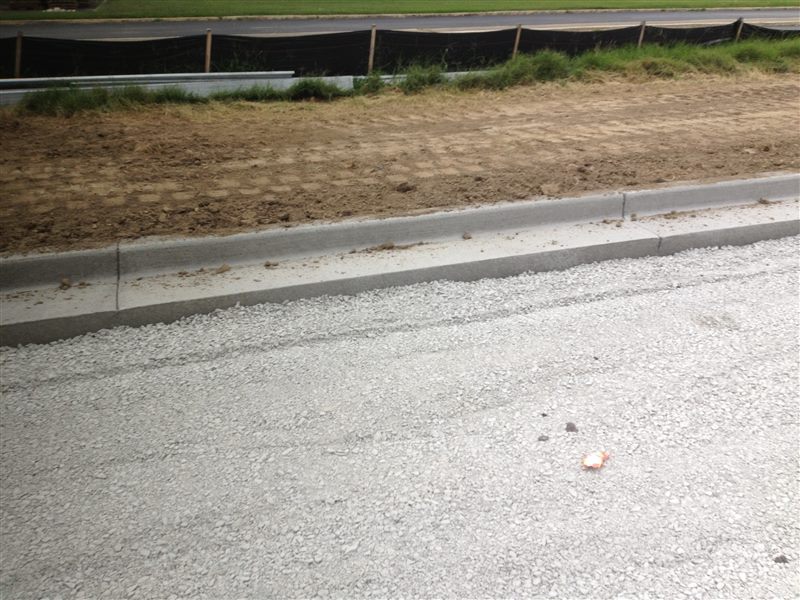
Excavation, base work and drainage fixes all have to be finished and stable before any asphalt goes down. That is why a rebuild takes longer than a resurfacing of a similar lot. The finished asphalt also has to cool before it carries traffic, and striping comes after.
Keeping the business running
Many commercial lots can be done in sections, at night or on a weekend, so customers keep a usable entrance and enough stalls. A good plan states in writing which stalls close on which days, how deliveries reach the dock, and where accessible parking sits while each section is down. Rebuilds are harder to hide because open excavation needs room, but phasing is still often possible.
Timing and weather
Hot mix has to be placed on a dry base in suitable temperatures. Rain or a cold snap can stop either type of job, so most commercial paving here is planned for warmer months. Any time ranges you are given are estimates for planning, not promises for a given site.
Questions to ask before you sign
- How will I know resurfacing is enough?
- The pavement should feel solid, with damage limited to the surface or a few patches. Rocking pavement, wide connected cracking and constant standing water point toward a rebuild.
- Will my lot be closed the whole time?
- Not necessarily. Sectional work, night work and weekend work are common ways to keep part of a lot open.
- Does resurfacing fix puddles?
- Only shallow ones where the new surface can carry the water to a working drain. Deeper grade and drain problems need correction as part of a bigger repair.
- Who decides the method?
- It should be based on a visit to the site. Ask for the reasons in writing.
American Group, LLC is insured and provides free written estimates. We can plan phased, after-hours or weekend schedules for commercial lots in Louisville and Elizabethtown. Call (502) 410-4080 in Louisville or (270) 505-4005 in Elizabethtown, or request a free estimate online.