
New concrete, first winter: a care plan for salt, ice and freeze-thaw
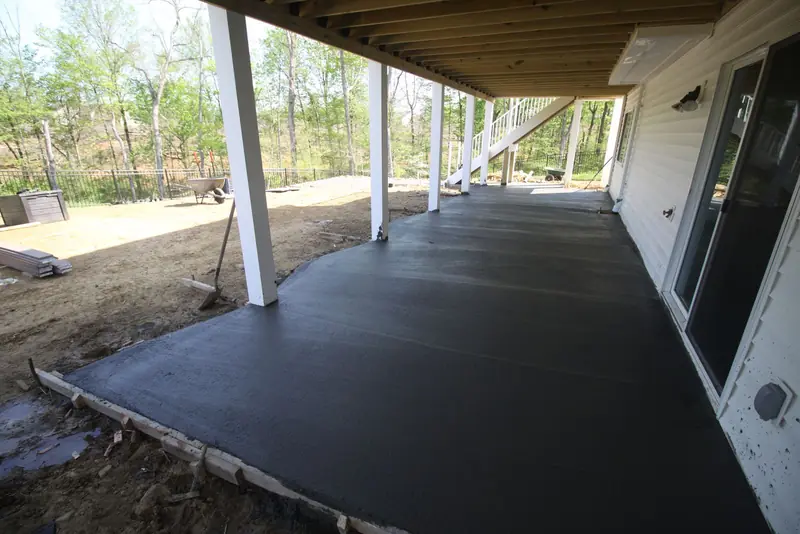
A new walk, pad or apron is an investment, and its first winter is the hardest test it will face. If you manage a building or run a business with new flatwork, a few decisions made before the first freeze can protect it. Louisville and Elizabethtown both get wet freezes most years, so the risk is real.
Our American Concrete division also published a version of this topic: Protecting new concrete from salt and freeze-thaw.
What happens to young concrete
Concrete keeps gaining strength after it is poured. Early on, water can move in and out of it more easily. When that water freezes it expands, and de-icing salt makes each cycle rougher on the surface. The result can be flaking, a coarse finish or damaged edges.
A plan for the first winter
- Send water away. Downspouts that empty onto a new walk keep the ground under it wet. Extend them so runoff leaves the slab.
- Use less salt at first. Shovel or plow snow when possible. If you need traction, try sand or a product made for new concrete, and ask your contractor what suits your pour's age.
- Keep joints in good shape. Control joints are there on purpose. Keep them clear, and have them sealed when that is appropriate, so water does not feed the base.
- Protect corners and edges. Apron edges and walk corners take hits from plows and shovels. Early chipping often traces back to water or impact.
- Keep heavy loads off. Dumpsters, trailers and delivery trucks can crack the edge of a pad that was poured for lighter use.
If you hire a snow contractor
Tell them which areas are new and ask them to go easy on salt there. Our own winter snow service covers commercial properties in Louisville and Jefferson County only, and we do not plow in Elizabethtown or Hardin County.
When damage is already visible
Light surface scaling can often be watched. Chipping that makes a trip edge, a panel that rocks, or water running toward a building deserves a closer look. Sometimes replacing one section is cleaner than repeated patches over a slab that never drained well.
Quick answers
- Can I use rock salt right away on a new drive?
- Hold off if you can. Heavy early salting is a common reason young concrete looks rough after one winter.
- Will sealing stop freeze-thaw damage?
- It helps keep water out of joints and fine cracks. It does not fix drainage or a washed-out base.
- Does flaking always mean a bad pour?
- No. The slab's age, salt use, plow contact and standing water all play a part.
- Should I wait for spring to call?
- Call now for an unsafe panel or water headed toward a foundation. Cosmetic wear can usually go on a spring list.
American Group, LLC is insured and gives free written estimates for concrete work in Louisville and Elizabethtown. A visit will show whether to seal, replace a section or leave it alone. Call (502) 410-4080 in Louisville or (270) 505-4005 in Elizabethtown, or request a free estimate online.